

Professor Kirsty Short
The n=1 Project [MARCH 2026]
When COVID-19 arrived in 2020, the world scrambled. Policy was improvised. Supply chains collapsed. Health systems buckled. And the science — despite being decades in the making — wasn't ready to be translated fast enough into the hands of the people who needed it.
Professor Kirsty Short had been warning about exactly this for years. Not because she was alarmist. Because she was paying attention.
Kirsty is a virologist at the University of Queensland whose research sits at one of the most consequential intersections in contemporary science — understanding how viruses spill over from animals into humans, who is most at risk when they do, and how we build the diagnostics, therapeutics, and policy frameworks to respond before the next pandemic gains momentum.
She has advised the New Zealand government on COVID-19 response strategy. She co-authored briefings presented directly to the Minister for Health and Chief Medical Officer.
Her research underpinned the evidence base for school reopening policies in Victoria and the UK. She contributed to the House of Representatives inquiry into Long COVID. She has reached more than 14 million people through media and public engagement.
And she has done all of this while simultaneously investigating how native Australian birds — black swans, emus, species found nowhere else on Earth — may shape the next evolution of avian influenza.
This is a career that cannot be replicated. Not the combination of disciplines. Not the range of impact. Not the path that led here.
This is n=1.
The next pandemic is not a matter of if. It is a matter of when.
COVID-19 was not an anomaly.
It was a warning.
THE PROBLEM
The last decade has seen a significant rise in the number of avian influenza viruses crossing from birds into humans — interspersed with human infections with coronaviruses, Nipah viruses, hantaviruses, and more. Any one of these events could be the first step in the emergence of a new pandemic pathogen.
We cannot predict which virus will be next. We cannot predict when.
What we can do — what Kirsty Short's research is actively doing — is build validated diagnostics, therapeutics, and risk frameworks that work across multiple viral pathogens, ready to deploy the moment a new threat emerges.
At the same time, a different and equally urgent threat is approaching Australia's borders.
Highly pathogenic avian influenza — H5N1 bird flu — has spread globally, devastating wild bird populations in South America and Antarctica. Oceania remains the only region unaffected. That status is assessed as having a moderate-to-high risk of changing.
When it does, Australia's native bird species — many of them found nowhere else in the world — will be on the front line. So will the poultry industry. So will human populations exposed to infected animals.
Kirsty's research is working to understand what that incursion will look like, how Australia's unique avifauna will shape viral evolution, and how policy and surveillance frameworks need to be positioned well before the first confirmed case arrives.
The cost of being underprepared — economically, ecologically, and in human lives — is already known.
The question is whether we choose to act on what the science is telling us.
At just five years post-PhD, she established her own research group. At twelve years post-PhD, she was promoted to Professor. In 2024–2025, she took seven months of maternity leave following the birth of her son — returning to a research program that continued to generate impact throughout.
Her awards include fourteen disciplinary, institutional, and industry recognitions for research excellence: the L'Oréal–UNESCO For Women in Science Australian Fellowship, the Johnson & Johnson COVID Collaborative and Industry Choice Award, the Science and Innovations Award for young people in agriculture, fisheries and forestry, the Australian Infectious Disease Network Research Excellence Award, and — in 2024 — the prestigious Australian Academy of Science Gottschalk Medal. She was also named one of Australia's Top 100 Innovators that same year.
She is, by any measure, one of Australia's leading scientific minds in her field.
She is also someone who drives to schools in Brisbane to talk to students about viruses, who developed a podcast on women in science because she saw the need for it, and who spent the height of the COVID pandemic making plain-language information videos with Professor Ian Frazer because she believed — genuinely — that getting science into the hands of the public was part of her job.
"What I really love about research is when you do an experiment and you get a result for the first time. There is a point in time when you know you are the only person in the world who knows that. And that's a really important fact — and it's actually your job to get that message out. That's my favourite part of the job."
Kirsty Short completed her PhD in 2013 and has been in continuous full-time research since — sustained over more than a decade by prestigious and highly competitive fellowship funding, including an NHMRC CJ Martin Fellowship, an ARC DECRA, and an NHMRC Investigator Grant.
THE RESEARCHER
Kirsty's research program operates across four interconnected areas.
THE RESEARCH
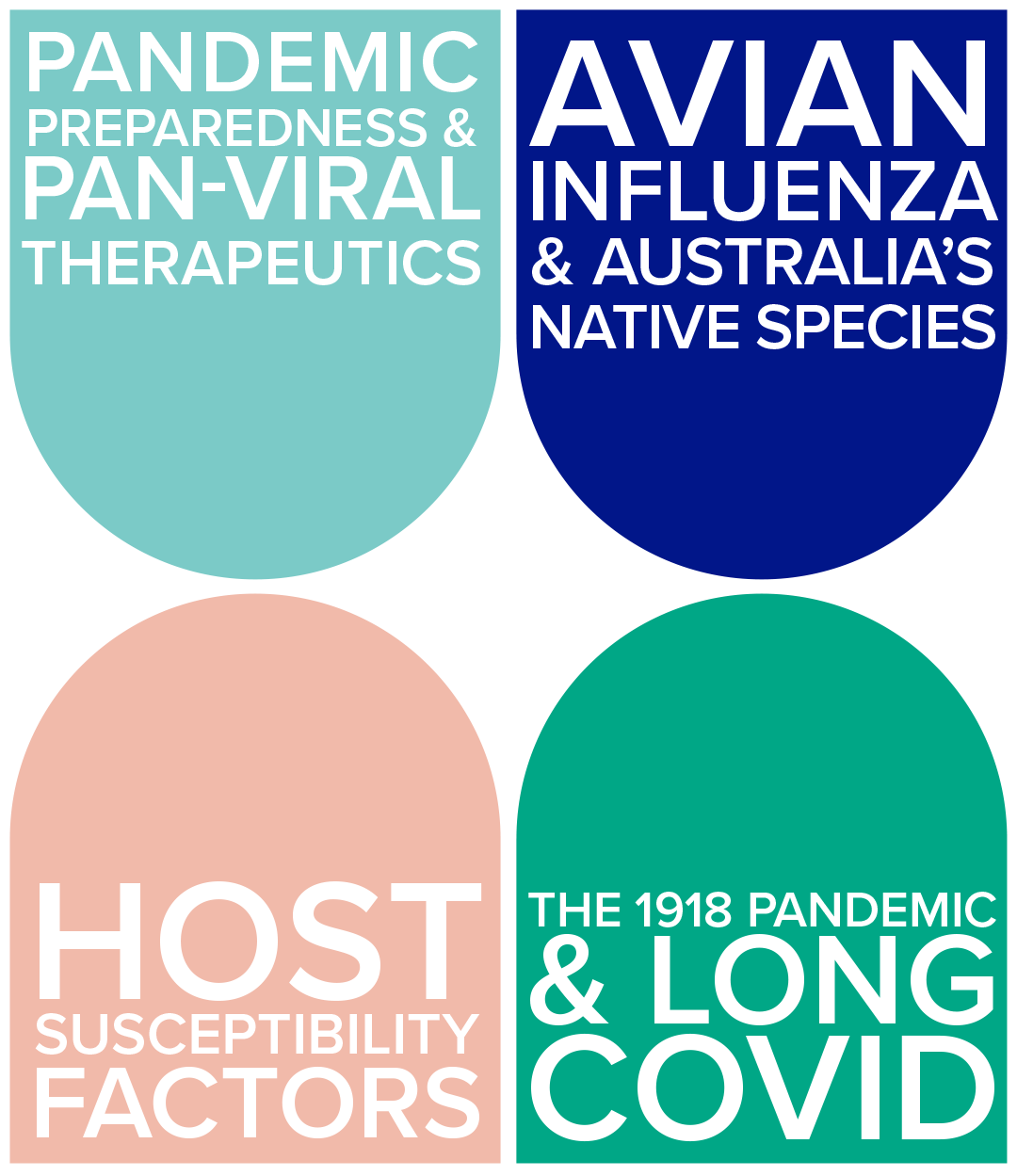
Pandemic preparedness and pan-viral therapeutics
Rather than developing treatments specific to a single virus, Kirsty's program uses innovative laboratory and animal models to develop and validate diagnostics and therapeutics effective across multiple different viral pathogens — a stockpile of validated strategies ready for immediate deployment when the next pandemic emerges. The lessons of COVID-19 are central to this work.
Host susceptibility
factors
Who is most at risk when a virus emerges — and why? Kirsty's research identified early that obesity and diabetes significantly increase the severity of respiratory viral infections, including through the specific mechanism of glycaemic control in diabetes patients. Her research also demonstrated that children were significantly less likely to transmit SARS-CoV-2 than initially assumed — data that directly informed school reopening policy in Australia and the UK.
Avian influenza and Australia's native species
H5N1 bird flu has already reached South America and Antarctica. Oceania is the last unaffected region. Kirsty's research investigates how Australia's unique avifauna — including black swans and emus — will respond to, and potentially shape the evolution of, avian influenza viruses. Her earlier DECRA research identified that black swans are uniquely susceptible to highly pathogenic avian influenza, associated with the absence of TLR7 expression in their endothelial cells — a finding that directly informs how Australia should position its biosecurity response.
The 1918 pandemic
and Long COVID
In a genuinely transdisciplinary project that brings together spatial genomics, history, immunology, and psychology, Kirsty's team is interrogating rare longitudinal asylum and military medical records and analysing century-old lung tissue from fatal 1918 influenza cases — seeking the molecular signatures of post-viral disease that connect the 1918 pandemic to what Long COVID patients are experiencing today. The findings will be translated into a virtual reality experience designed to improve scientific literacy and pandemic preparedness behaviours.

She has also chosen, consistently, to spend time outside the laboratory.
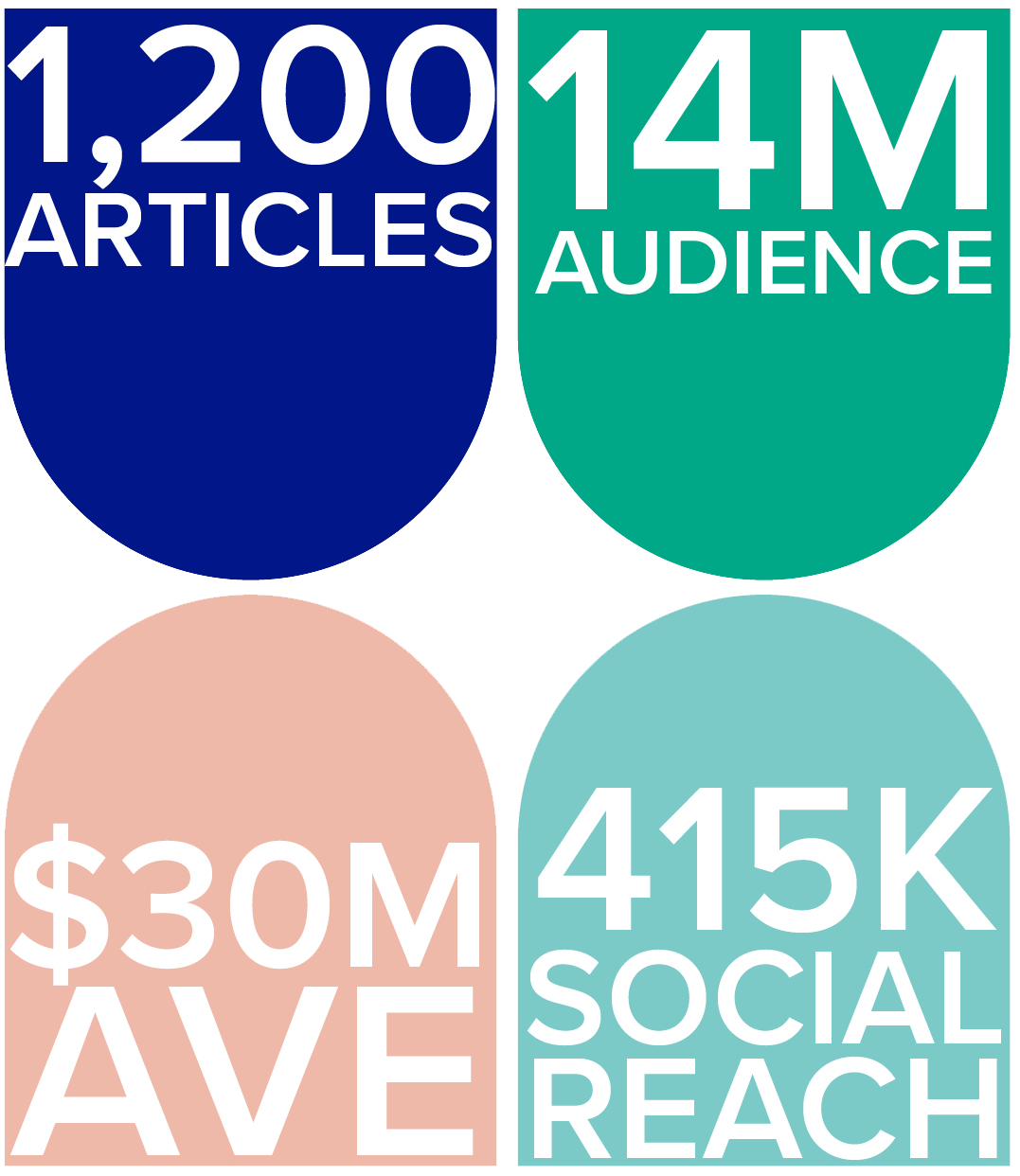
From February 2020 to February 2021 alone, she was featured in more than 1,200 media articles, reaching audiences across print, radio, and television — ABC, BBC World Service, SBS, Channel 9, Channel 10 The Project, German television, French television, Channel News Asia — with an estimated audience reach of more than 14 million people and an advertising value equivalency of approximately $30 million.
She has presented her research at the World Science Festival. She developed pandemic information videos alongside Professor Ian Frazer that reached 21,000 plays and a social media audience of more than 415,000 people. She hosts a podcast on Women in Science, for which she won the UQ SCMB Equity, Diversity & Inclusion Award.
And she is a deliberate mentor to women in science — speaking at university events, contributing to industry programmes, and being featured in Vogue Australia as an inspiring woman in science in 2019.
None of this looks like a single career trajectory. It looks like the work of someone who decided, early, that research impact was not a metric to be recorded in a grant application. It was a responsibility to be actively pursued.
THE JOURNEY
Kirsty Short's career has been built on the conviction that the science of pandemics matters — not just in the laboratory, but in the policy room, in the hospital, in the classroom, and in the living rooms of people trying to understand what is happening to their world.
Continuous fellowship funding since her PhD has provided the infrastructure for her research independence. But the shape of her career — its breadth, its public dimension, its deliberate interdisciplinarity — reflects a series of choices made with clear purpose.
She co-initiated the International COVID BMI Consortium, coordinating 18 research sites across 11 countries. She has collaborated with the ACDP, the Department of Agriculture Victoria, Seoul National University, and the Australian Avian Genomics Initiative. She is the lead investigator on two clinical studies running through Mater Hospital, Brisbane.
THE IMPACT
Kirsty Short's research has directly shaped Australia's COVID-19 and bird flu policy response.
In 2020, she co-authored a Rapid Research Information Forum for the Australian Academy of Science, presented to the Minister for Health and the Chief Medical Officer to inform Australia's national COVID response. She was a member of the Group of 8 University panel advising the Australian Government on the COVID roadmap, and was invited to advise the New Zealand Government on COVID vaccine strategy.
Her research on children and SARS-CoV-2 transmission was cited by Victorian and UK policy guidelines to justify the prioritisation of school reopenings.
Her Long COVID research led to her selection as an expert member on the House of Representatives Committee on Health and Ageing inquiry into Long COVID and repeated infections in 2023.
Her research on highly pathogenic avian influenza in native Australian species was used to inform the HPAI incursion risk assessment for Australia, presented to the Office of the Chief Veterinary Officer in May 2023.
WHAT’S NEXT
Kirsty's vision is unambiguous.
"My vision is to ensure that we are adequately prepared for the next viral pandemic. Building on my work on emerging viral pathogens and pandemic preparedness, I aim to produce safe, effective, and broad-spectrum therapeutics and rapid diagnostics ready for clinical use as soon as any new virus emerges in the human population."
That work — pan-viral, broad-spectrum, ready to deploy — is the infrastructure the world did not have in 2020.
Kirsty Short is building it.

THIS IS n=1
Kirsty Short's career spans virology, avian biology, genomics, clinical research, public health policy, science communication, and gender equity in science.
Each strand connects to the others. Each choice has shaped what came next. The continuous fellowship funding that enabled her independence. The decision to investigate native Australian birds when the rest of the world was focused elsewhere. The commitment to science communication as a core responsibility rather than an optional extra.
In statistics, n denotes sample size. To draw conclusions about a population, you need a sample.
But no inference drawn from the population of research careers could have predicted this particular combination — this precise path, these specific choices, this unrepeatable intersection of science and impact.
The sample size is one.
It always is.

Prof Kirsty Short
n=-1 FEATURED RESEARCHER [MAR.26]
SUPPORT THIS RESEARCH
Kirsty Short's research is based at the University of Queensland.
To support her work and the broader research it represents.
Why n=1?
An n=1 study focuses deeply on one individual over time. Case studies provide practical, real-life insights that population studies cannot.
The same applies to research careers.
By presenting detailed observations of individual researchers, we demonstrate what excellence, dedication, and vision look like in practice. Not as abstract concepts or averaged data points, but as lived experience.
The intended outcomes:
For researchers: Recognition that your path doesn't need to mirror anyone else's to be valid. Your unique combination of talents and choices is the point.
For funders and policymakers: Evidence of the exceptional talent conducting groundbreaking research across Australia. Real people. Real projects. Real impact that deserves sustainable investment.
For the broader public: Understanding that research careers are as diverse as the problems they address. There is no template. There is only the unrepeatable intersection of expertise, passion, and opportunity that each researcher represents.
Your career is n=1.
Whether you've found your path inside or outside academia, whether your path looks like anyone else's or not, to validate your career you only need a sample size of one.
Yours.