

A/Professor Shayanti Mukherjee
The n=1 Project [FEBRUARY 2026]
Transforming outcomes for the 50% of birthing women expected to develop Pelvic Organ Prolapse
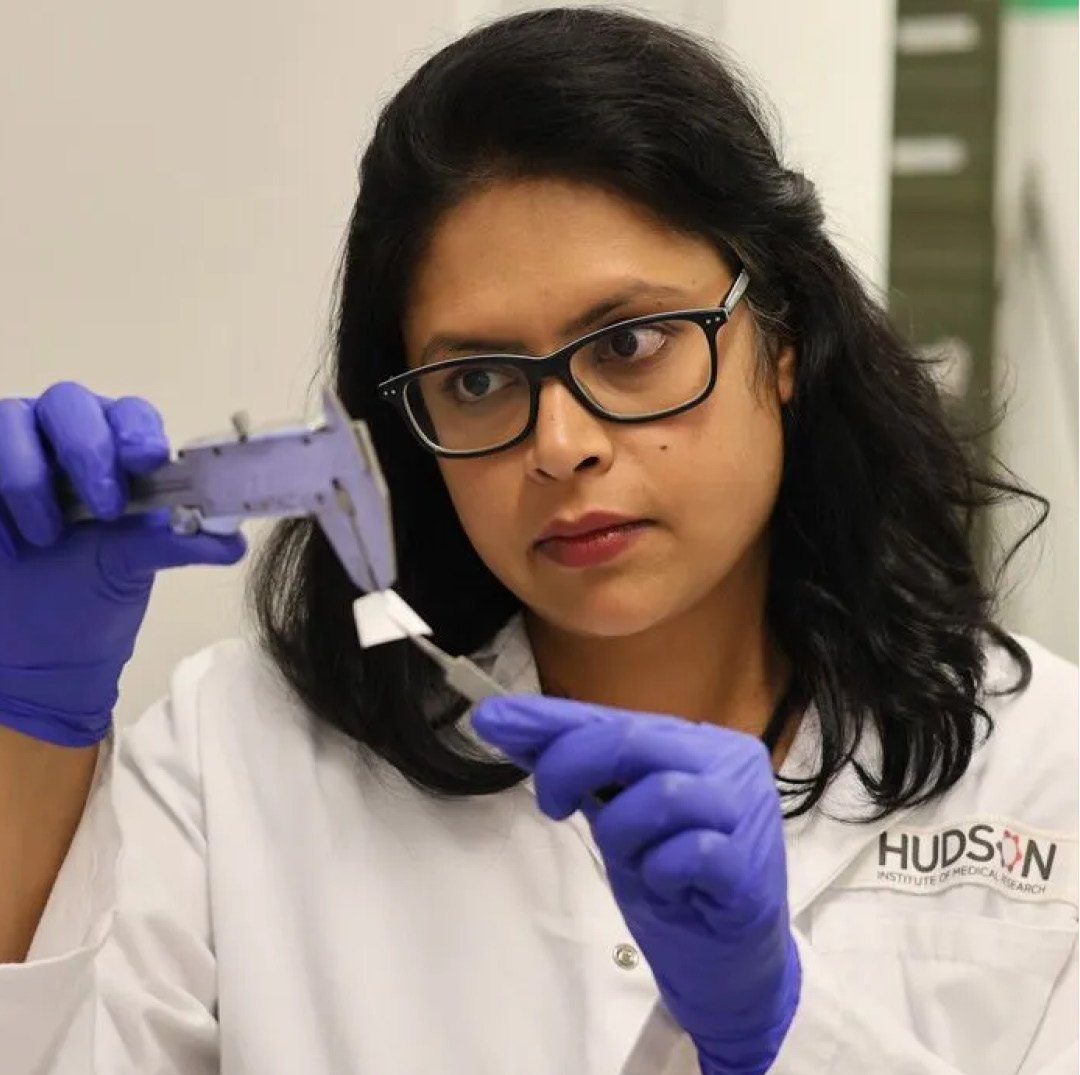
Associate Professor Shayanti Mukherjee combines biomaterial science, 3D bioprinting, and stem cell biology to create treatments, early detection, and prevention for a devastating yet neglected urogynecological condition.
A Neglected Crisis in Women’s Health
Pelvic Organ Prolapse (POP) is a highly debilitating yet neglected urogynaecological condition that develops from untreated vaginal childbirth injuries.
THE PROBLEM
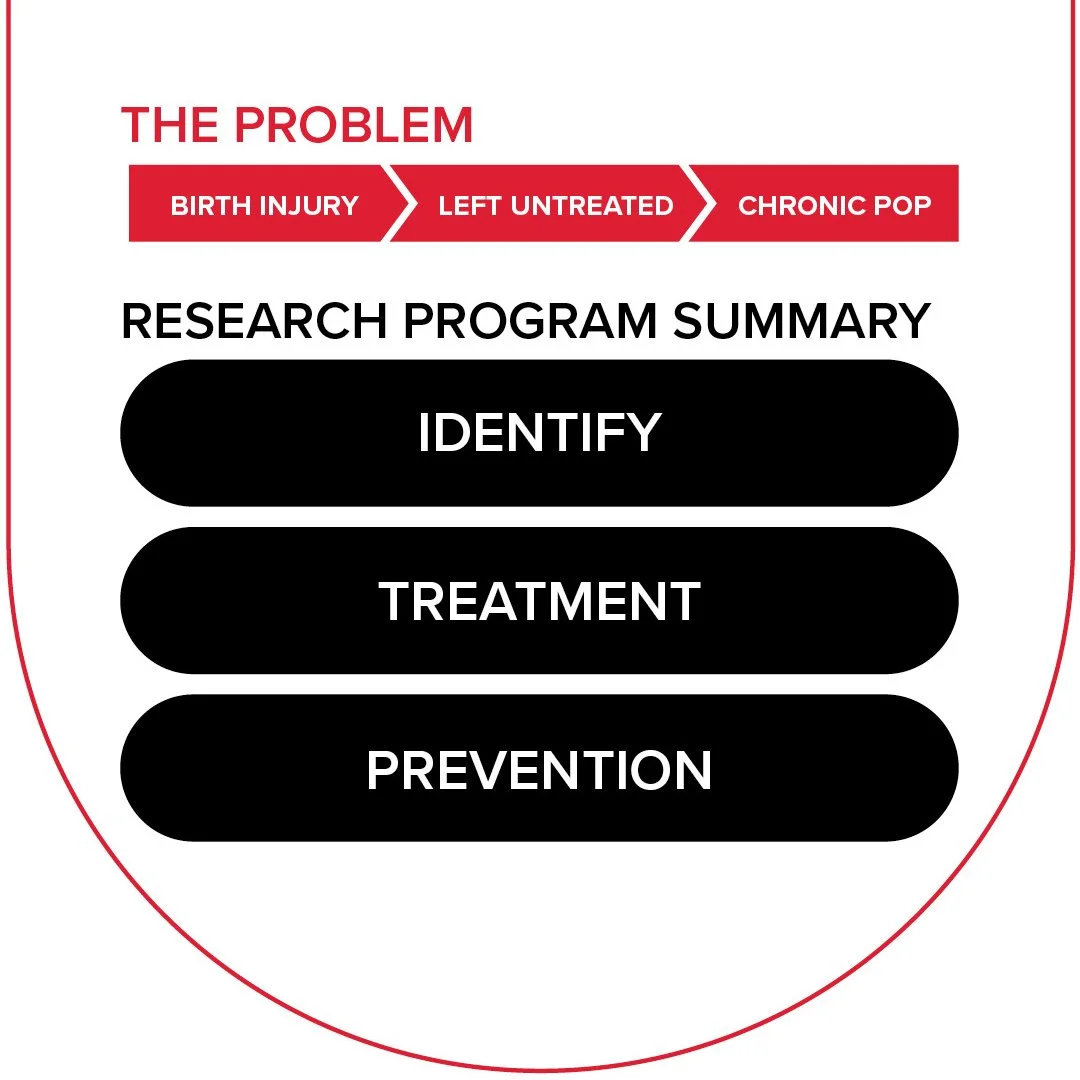
Eventually these injuries manifest into a chronic condition where pelvic organs—bladder, bowel, uterus—herniate into the vagina and even outside the body, requiring surgical reconstruction for 1 in 5 women. If you think that’s uncomfortable to think about, imagine living through it.
With no reliable alternative treatments or preventative therapies, POP represents a significant healthcare burden. Many women face ongoing and frequent hospitalisations for multiple surgeries, that regularly don’t work.
The scale: Approximately 50% of women aged 50 and older who have given birth are expected to develop POP, significantly impacting their quality of life. As the global population ages, this prevalence is projected to affect a staggering 50% of women worldwide.
The legacy of failure: For many years, non-degradable polypropylene (PP) transvaginal meshes were commonly used for reconstructive surgery to address native tissue repair failures. However, the risks of complications vastly outweighed the benefits, leading to a global ban and discontinuation of transvaginal PP meshes. The repercussions of flawed design and inadequate testing have cost over $8 billion in compensation payments—and chronic pain and suffering for countless patients.
Today’s reality: There is still no optimal therapy for POP. Current surgical reconstructions have high failure rates. There’s no means of detecting lesions that increase POP risk in postnatal women, meaning women must wait and see until they develop POP post-menopausally—often decades after the initial childbirth injuries.
The unmet need: POP has a devastating effect on women’s physical, sexual, and mental health. Quality of life is profoundly diminished. Yet this condition remains under-researched, under-funded, and often dismissed as an inevitable consequence of childbirth and ageing.

1. Better Treatment:
Novel 3D Bio-Printed Cellular Therapies
Shayanti's team is developing degradable
3D-printed scaffolds that promote tissue integration without the erosion problems that led to the polypropylene mesh ban. By incorporating reparative stem cells and nanoscopic tissue-friendly cues, these bioengineered scaffolds address the catastrophic complications of permanent implants while enabling more effective vaginal repair.
2. Early Detection: Early Markers of POP Onset
Advanced infrared imaging is being used to detect spectral and nanoscopic signatures in vaginal tissues. This will enable early detection of POP onset, allowing for timely deployment of the new reparative therapies before the condition fully manifests. Rather than waiting until post-menopausal presentation, this approach could identify risk in postnatal women decades earlier.
3. Enabling Prevention: Surface Modification to Control Vaginal Response
This research includes trialing 3D-printed scaffolds and hydragels as prophylactic treatment for vaginal injury after childbirth to prevent subsequent progression to POP. Surface modification methods aim to control vaginal tissue response, potentially interrupting the pathway from childbirth injury to chronic POP.
Three-Pronged Approach to Detection, Treatment & Prevention
Shayanti’s interdisciplinary program aims to bring new therapies to the clinic while enabling early detection and prevention. Her research addresses critical knowledge gaps in understanding how POP first initiates and progresses—essential groundwork for developing effective interventions.
THE INNOVATION
Interdisciplinary Capabilities for Complex Problems
Shayanti’s interdisciplinary program aims to bring new therapies to the clinic while enabling early detection and prevention. Her research addresses critical knowledge gaps in understanding how POP first initiates and progresses—essential groundwork for developing effective interventions.
THE EXPERTISE
Creating new therapies and interventions for POP requires expertise spanning multiple disciplines.
Shayanti ‘s innovative pelvic biomedicine research program brings together:
Biomaterial science - developing novel degradable polymers
Stem cell biology - engineering reparative cellular therapies
3D printing technology - fabricating nanostructured scaffolds
Nanotechnology - creating tissue-friendly surface modifications
Immunology - understanding foreign body response
Pelvic biology - specialist knowledge of vaginal tissue and POP pathology
Preclinical models - large animal model expertise for surgical experiments
This unique combination of expertise is essential to conduct groundbreaking tissue engineering and nanomaterials research.

From Lab to Clinic to Commercial Pipeline
Critically, Shayanti has built strong clinical collaborations at Monash Health, ensuring research design considers clinical translation from the outset.
THE PATHWAY TO HER IMPACT
Importantly, she has engaged with consumers and created a network of women with lived experience to ensure the research is aligned with their needs. She’s attracted commercial investment from bioprinting company Aspect Biosystems and led research for the clinical trial of a 3D-printed device with Arkwright Technologies. Aspects of her research have already entered the commercial pipeline with Australian National Fabrication Facility—demonstrating the translation potential of this work. This isn’t research designed solely for publication. It’s research designed for patient impact through consumer insights, clinical application and commercial partnership.
Transforming Outcomes Across Multiple Dimensions
THE IMPACT
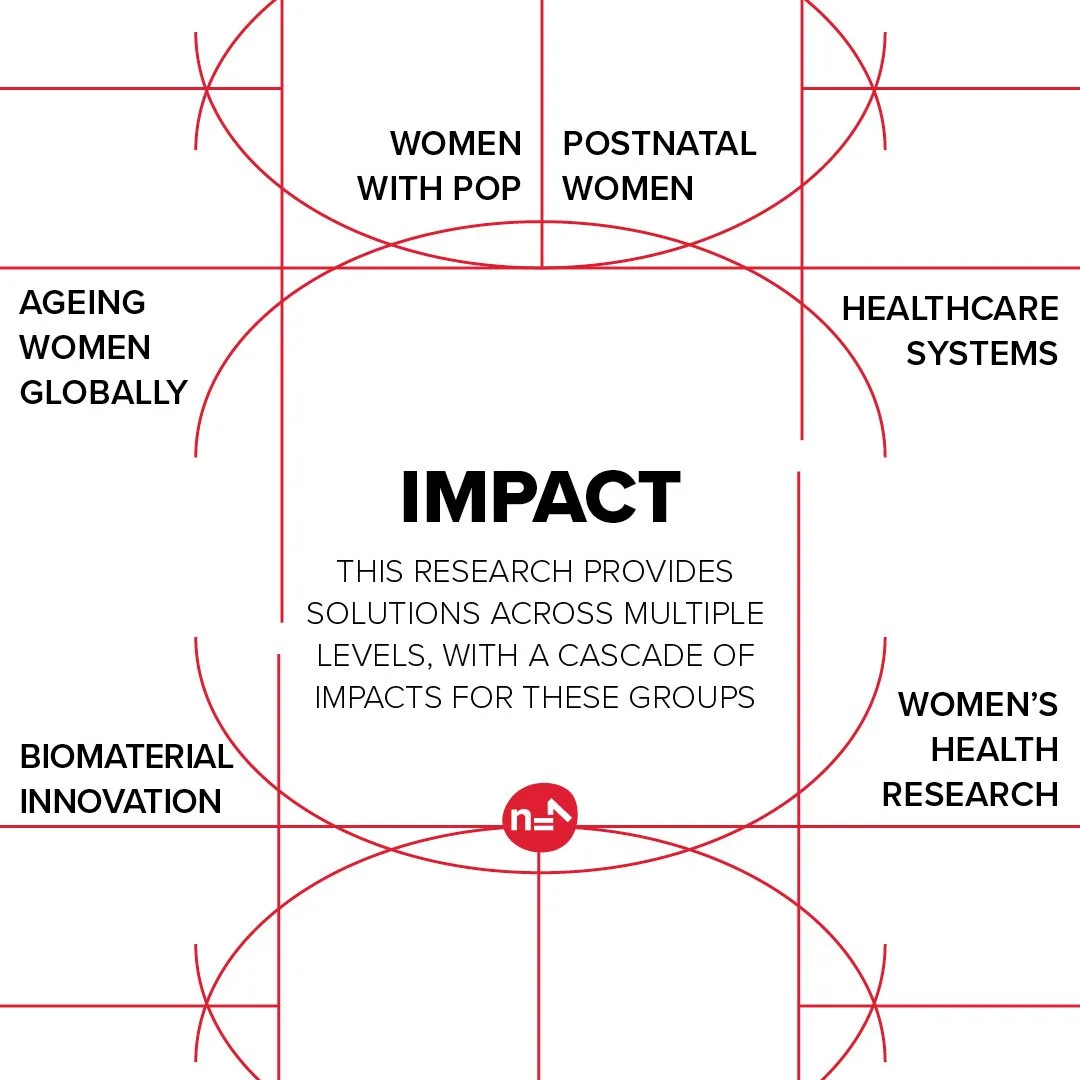
This research provides solutions across multiple levels, with a cascade of impacts for:
Postnatal women: Prophylactic treatment preventing progression from childbirth injuries to chronic POP, rather than decades of waiting to see if the condition develops.
Women with POP: Access to treatments with better outcomes—degradable scaffolds that integrate properly without the erosion and inflammatory complications of previous mesh approaches.
Ageing women globally: Quality of life maintained for up to half of all birthing women, rather than “putting up” with the chronic condition, living full healthy lives without constraints.
Healthcare systems: Reduced burden of repeated hospitalisations and multiple surgeries that currently characterise POP treatment.
Women’s health research: Demonstrating that neglected postnatal conditions warrant serious investment, shifting funding priorities toward conditions disproportionately affecting women.
Biomaterial innovation: Advancing degradable 3D-printed scaffolds addressing foreign body response—technologies applicable across multiple surgical implant applications.
THE COST OF RESEARCH
What Investment is needed
While this work has had success with NHMRC Ideas grants (project funding for innovative research), Al and Val Rosenstrauss Fellowship (prestigious medical researcher career award), Medical Research Future Fund (translation and clinical trial support) and commercial partnerships for device development, this innovative research requires sustained funding across the pipeline from early-stage discovery through clinical trials:
The daily consumables for early-stage lab research, generating preliminary data for various projects that support future grant applications
Engagement with consumers who provide their valuable insights and experiences to ensure the research delivers what is needed
The stipends for high-quality PhD students to work on this research, who develop valuable skills for the future workforce ($105,000 for 3.5 years; the length of a PhD program in Australia)
The salary for an experienced postdoctoral researcher to train the next generation of research leaders (~$125,000 per annum including salary and on-costs for early-career researchers in Australia)
Pre-clinical and clinical trials translating laboratory discoveries to actual patient treatments

The Consequences of Under-Investment
WHAT’S AT STAKE
Without sustained research funding and clinical translation support:
Millions of women will continue facing a condition with no optimal therapy. Surgical reconstructions will continue failing at high rates. No early detection means women wait until post-menopause to discover they’ve developed POP from childbirth injuries that could have been addressed decades earlier.
The next generation of women giving birth will face the same outcomes as current generations—a devastating chronic condition treated as an inevitable consequence of ageing rather than a solvable medical problem.
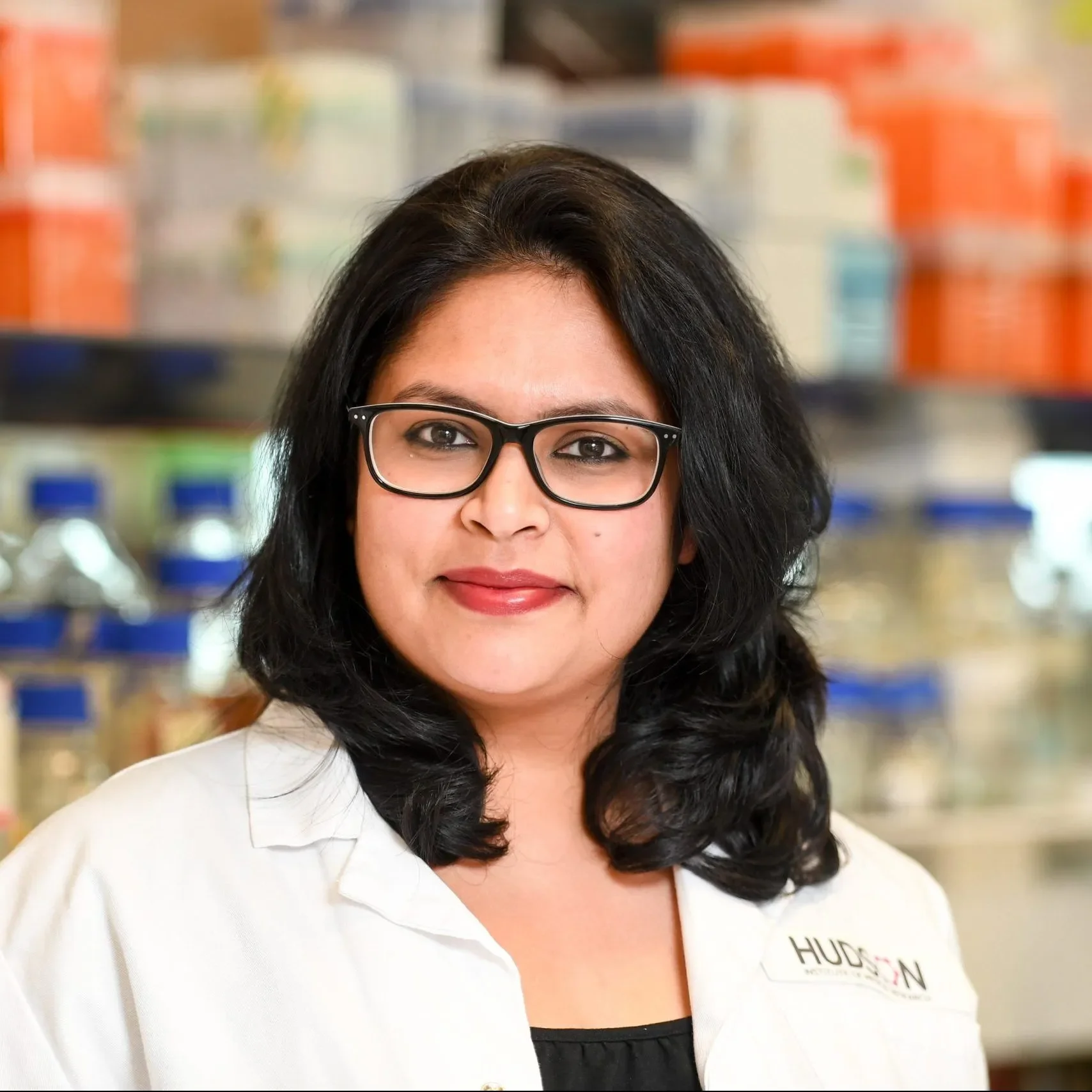
Dr Shayanti Mukherjee
n=-1 FEATURED RESEARCHER [FEB.26]
Click to learn more about her research addressing Pelvic Organ Prolapse and biomaterials for reconstructive surgery
Learn more about Shayanti and her award winning career
To support breakthrough laboratory discoveries to clinical trials you can donate to Shayanti’s work here
Why n=1?
An n=1 study focuses deeply on one individual over time. Case studies provide practical, real-life insights that population studies cannot.
The same applies to research careers.
By presenting detailed observations of individual researchers, we demonstrate what excellence, dedication, and vision look like in practice. Not as abstract concepts or averaged data points, but as lived experience.
The intended outcomes:
For researchers: Recognition that your path doesn't need to mirror anyone else's to be valid. Your unique combination of talents and choices is the point.
For funders and policymakers: Evidence of the exceptional talent conducting groundbreaking research across Australia. Real people. Real projects. Real impact that deserves sustainable investment.
For the broader public: Understanding that research careers are as diverse as the problems they address. There is no template. There is only the unrepeatable intersection of expertise, passion, and opportunity that each researcher represents.
Your career is n=1.
Whether you've found your path inside or outside academia, whether your path looks like anyone else's or not, to validate your career you only need a sample size of one.
Yours.